

Engineered to Vanish
Packard, the Cold War Non-Magnetic Engine, and the Rise of the Big Three
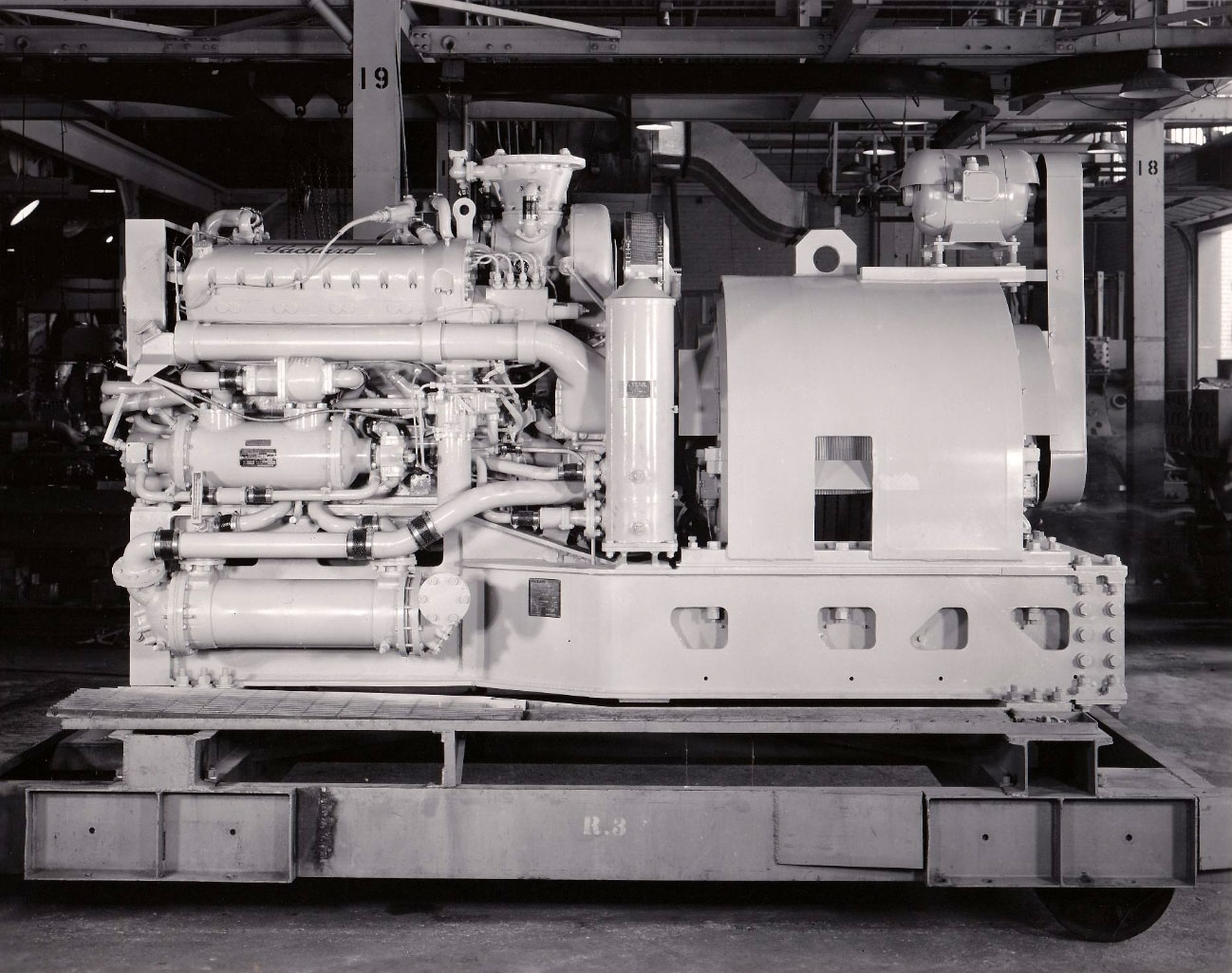
Early version of the Packard V12 Model 1D-1700 The Threat Under the Waves
When most people think of Packard, they nostalgically picture opulent luxury cars and the pinnacle of Detroit craftsmanship. Tucked away at the Packard Proving Grounds sits a massive, 2,449-pound mechanical beast that tells a completely different story—one of high-stakes Cold War espionage, brilliant engineering, and a political betrayal that ultimately spelled the end for this legendary automaker. Meet the Packard Series 142 V12 Model 1D-1700. It didn’t power a luxury sedan. It was built to hunt deadly naval mines.
The Threat Under the Waves
During the Korean War (1950–1953), one of the greatest threats to the U.S. Navy was naval mines.
The Korean War is widely considered the first major “hot” outbreak of the Cold War. The Cold War suddenly turned red-hot on June 25, 1950, marking its first major outbreak on the Korean Peninsula. Ever since World War II, the country had been frozen in place—divided at the 38th Parallel between a communist North and a Western-backed South. When plans to peacefully reunite the nation failed, the Soviet Union chose to test American resolve through a proxy. Armed with heavy Soviet armor and aircraft, North Korean dictator Kim Il Sung launched a massive surprise invasion across the border, instantly overwhelming the anti-communist government of Syngman Rhee.
While North Korean peasants in wooden sampan boats physically dropped mines into the water, the mines themselves were completely new, sophisticated Soviet designs supplied secretly by Moscow.
The Soviets used their spy networks to learn about U.S. ship movements and naval technology, allowing them to adjust the magnetic sensitivity sensors on their mines to target American hulls perfectly. When Soviet magnetic and acoustic mines successfully paralyzed the U.S. Navy at Wonsan Harbor in 1950, it was a massive intelligence shock. The U.S. military realized its current minesweepers were completely vulnerable. These hidden killers detonated by sensing the iron and steel hulls of passing warships. Sending standard ships to clear them was suicide.
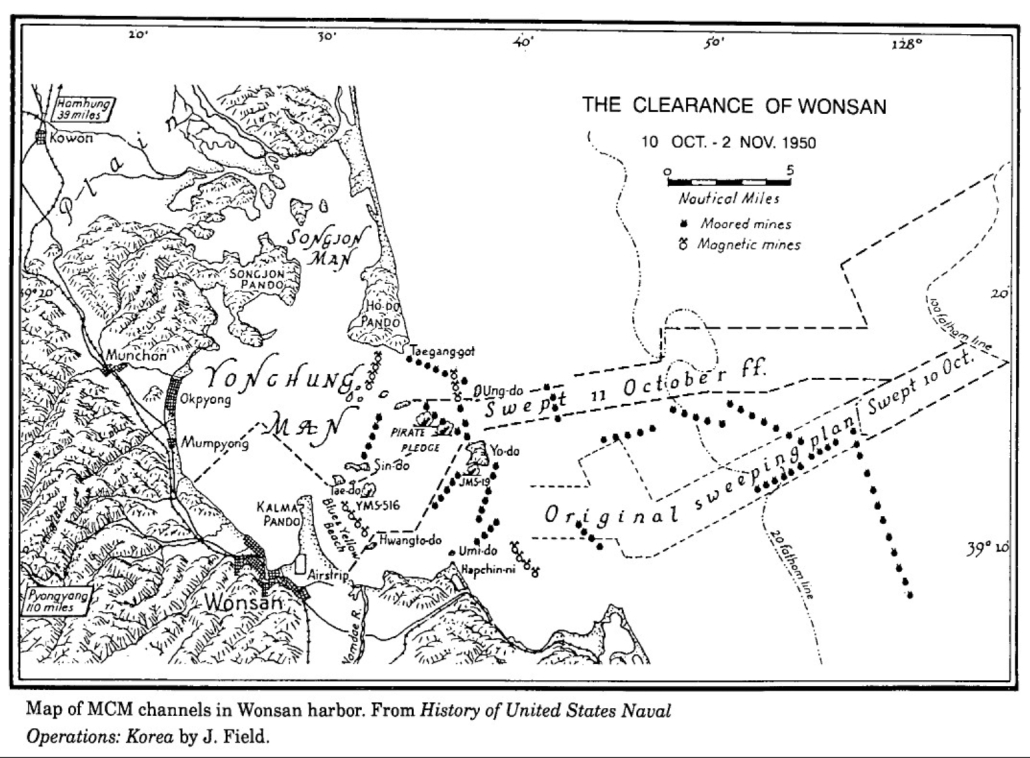
Compared to early direct-contact models, Soviet naval mines used in the Korean War introduced unprecedented technological threats that plagued the U.S. Navy:
- Advanced Sensors & Targeting: Rather than exploding on contact with the first vessel, newer mines used acoustic, pressure, and magnetic sensors—drawing them toward steel hulls without touching—and featured ship counters that let multiple vessels pass before detonating.
- Stealth & Counter-Sweeping: New mines possessed delayed-arming sleep timers, built-in explosive cutters to destroy sweepers’ gear, and could be launched secretly from submarines or hand-thrown from small wooden fishing boats.
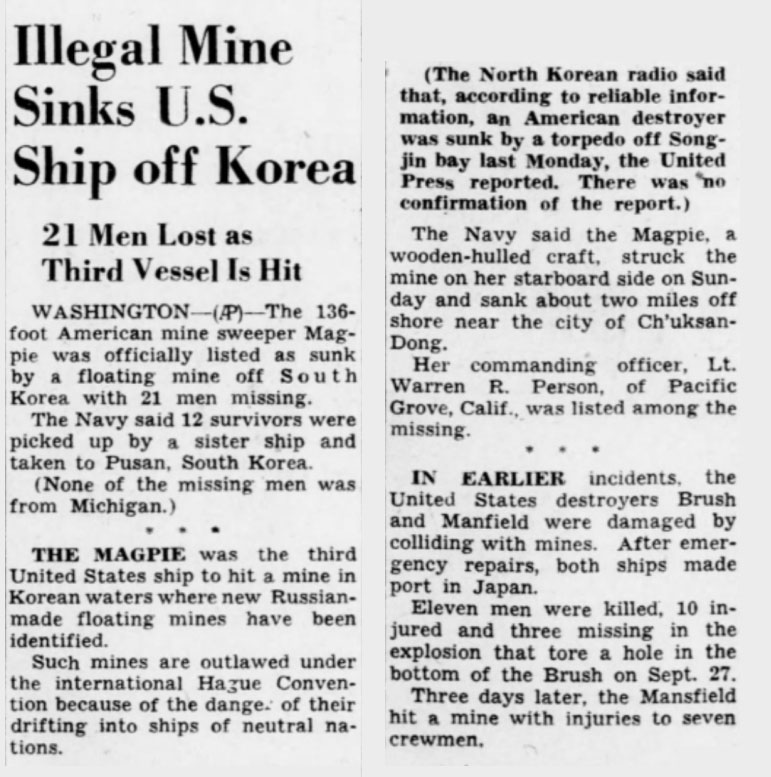
- Evolving Floating Mines: Outlined in an October 6, 1950 Detroit Free Press article, floating mines evolved from heavy anchored spheres needing a hard collision into small, cable-severing drifting threats triggered by ultra-sensitive acid tubes.
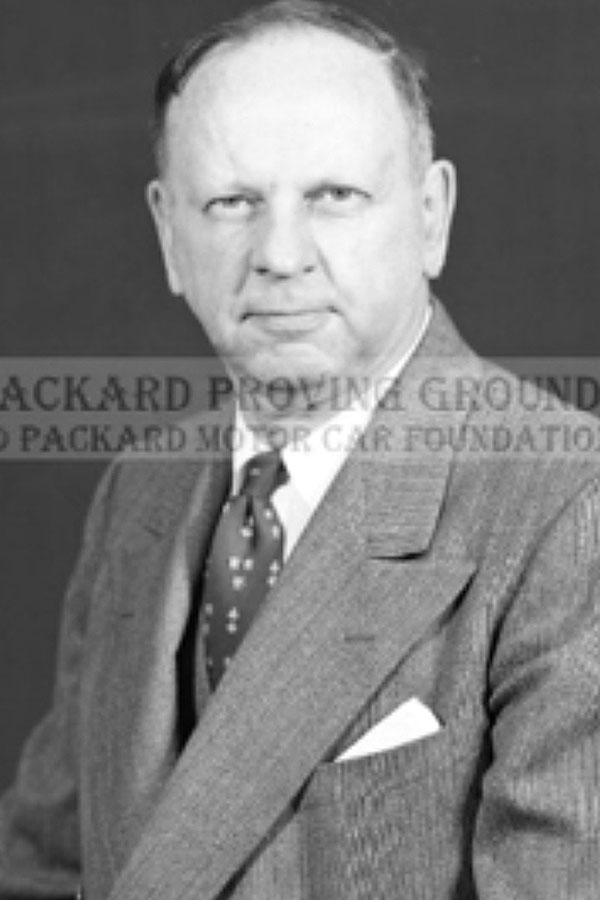
This intelligence failure triggered a top-secret emergency military project for Packard. To counter these magnetic and acoustic threats, the Navy required new wooden-hulled Aggressive-class minesweepers. Under strict security, Packard engineers Jesse Vincent, Marsden Ware, R.E. Taylor, and Julius Witzky were tasked with designing the non-magnetic 1D-1700 diesel engine completely free of traditional cast iron.
Jesse Vincent
Engineer
Marsden Ware
Engineer

R.E. Taylor
Engineer
Julius Witzky
Photo Credit: Al Harting Collection, History of Aviation Collection, Special Collections and Archives Division, Eugene McDermott Library,
The University of Texas at Dallas. All other photos are from the Packard Proving Grounds Historical Site archive.
The Non-Magnetic Blueprint
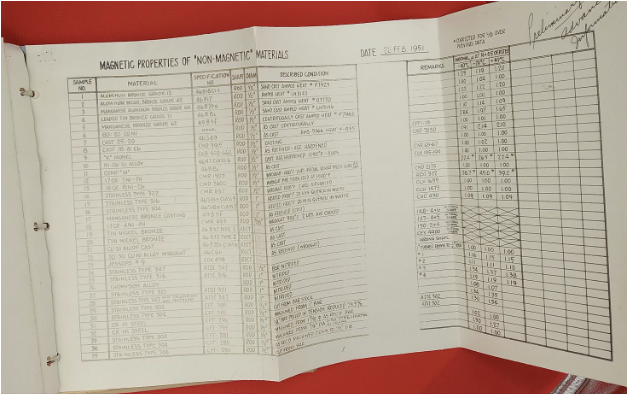
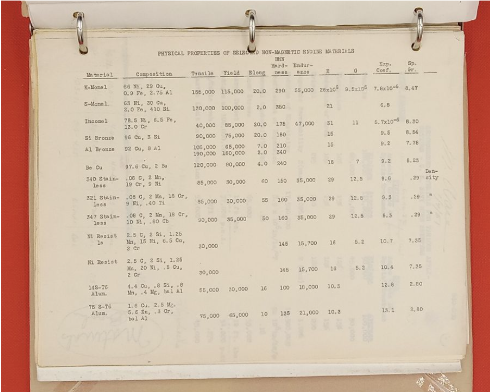
Marsden Ware’s daughter generously donated her father’s notebooks on the development of the non-magnetic engine to the Packard Proving Grounds Archive. Its pages are full of his research and handwritten notes regarding various non-magnetic metals and how each compares in its ability to withstand the elements an engine at sea would face.
Here is the distinct list of every type of metal used to construct the Packard 1D-1700 engine to keep it non-magnetic:
- Aluminum Alloys: Used for the engine’s primary structural components, including the massive engine block, oil pan, pistons, and cylinder heads. Although the Ordnance Department added aluminum to its strategic materials list only in 1936, the metal rapidly proved indispensable to wartime production.
- Magnesium Alloys: Used in various exterior housings, accessory covers, and structural casings to reduce overall weight.
- Stainless Steel: Used for heavy-wear internal moving parts that require immense structural integrity, such as the crankshaft, connecting rods, valves, and camshafts.
- Copper & Copper Alloys: Used extensively throughout the engine’s internal and external plumbing, oil lines, and electrical wiring.
- Brass & Bronze: Utilized for bushings, specialized fittings, sleeves, and valve guides where low-friction, non-magnetic movement was required.
These five metals replaced traditional cast iron and standard carbon steel, reducing the engine’s magnetic signature to near zero while remaining heat-tolerant. The result was an engineering marvel.
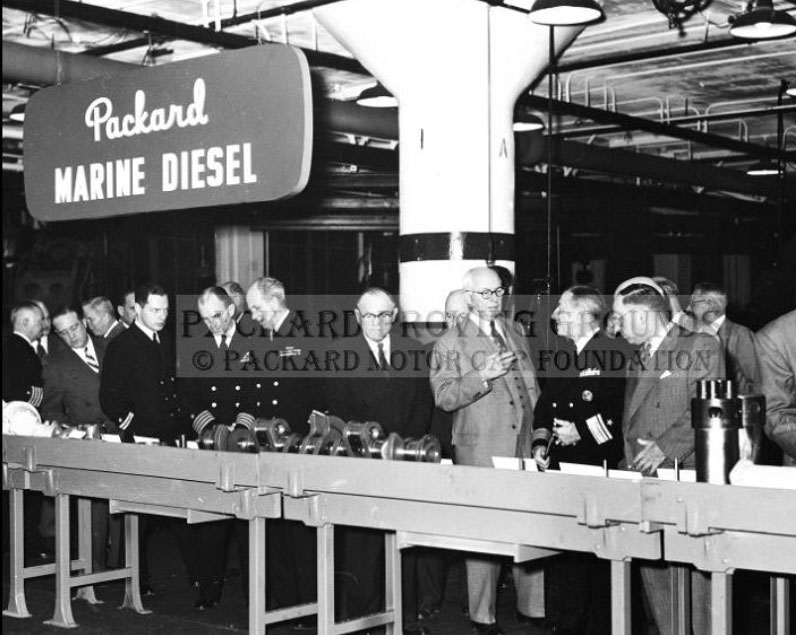
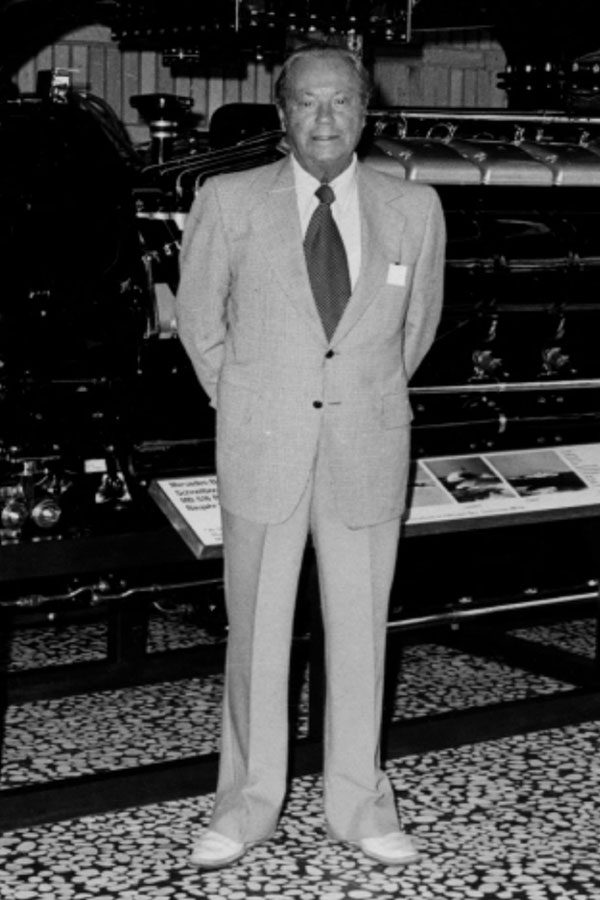
Recently retired Packard engineer Jesse Vincent (center, in the lighter suit) served as a consultant to the company’s younger designers and engineers as they transitioned to tackle the highly specialized Cold War military contracts.
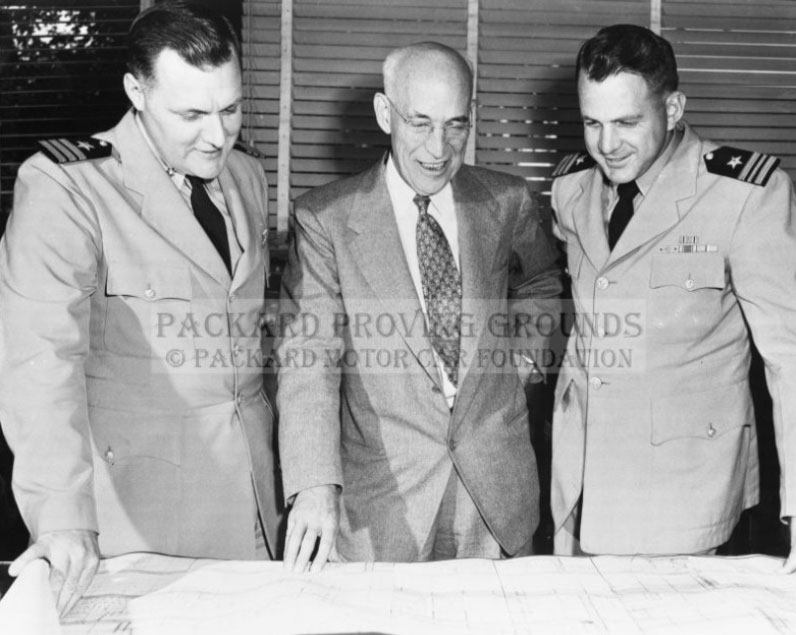
Navy personnel inspecting a blueprint with Packard Vice President George Brodie. Navy Personnel visited the plant periodically. One such visit occurred in October 1953. This visit was in August of 1954.
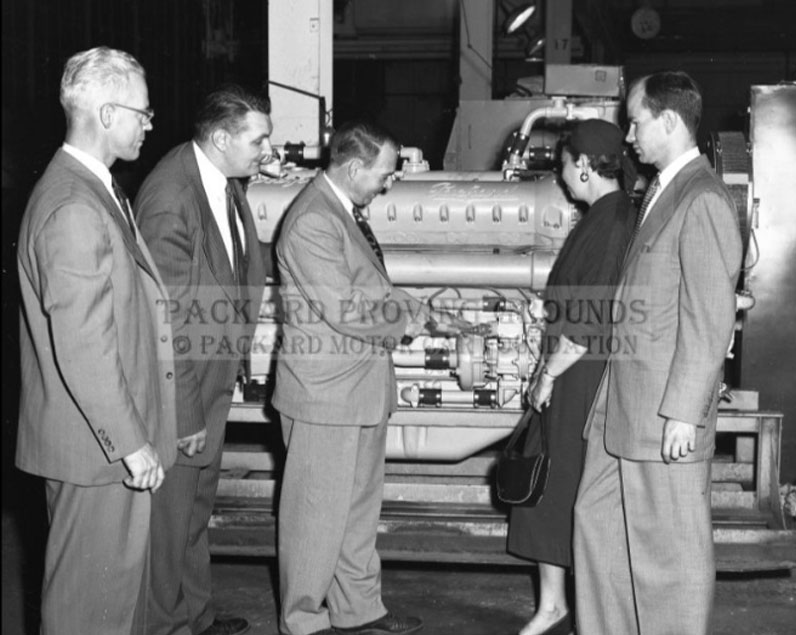
Packard President Jim Nance (center of photo) showing the right side of the engine to Navy personnel.
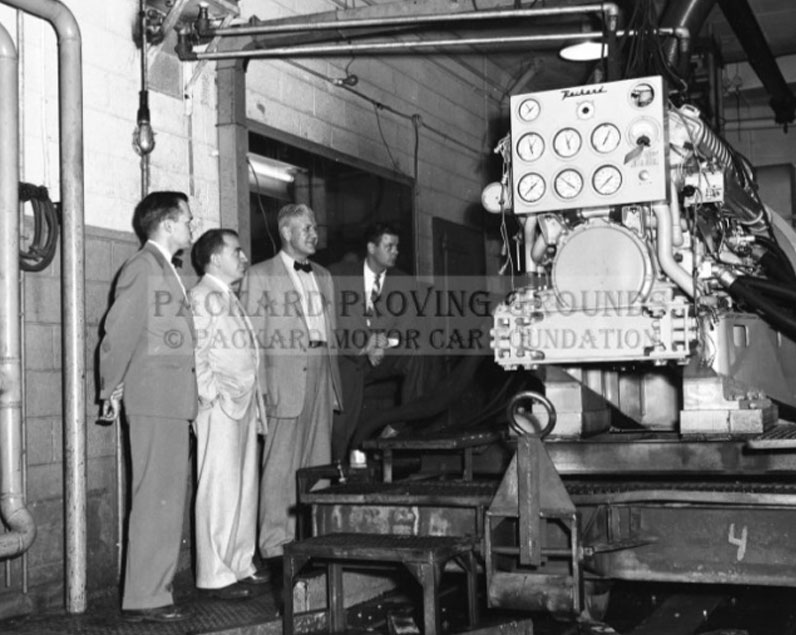
Navy personnel inspecting Packard-supplied control panel on the back of the engine.
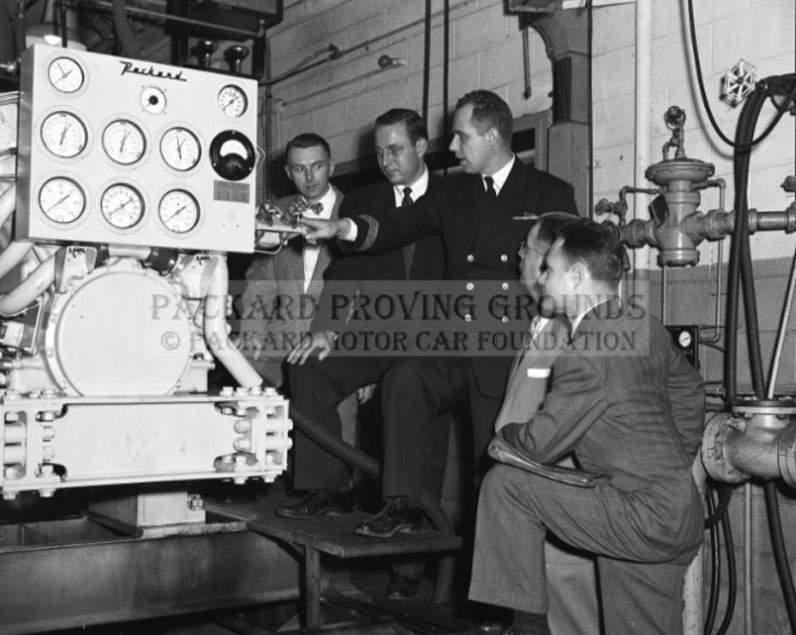
Navy personnel inspecting the Packard-supplied control panel on the back of the engine.
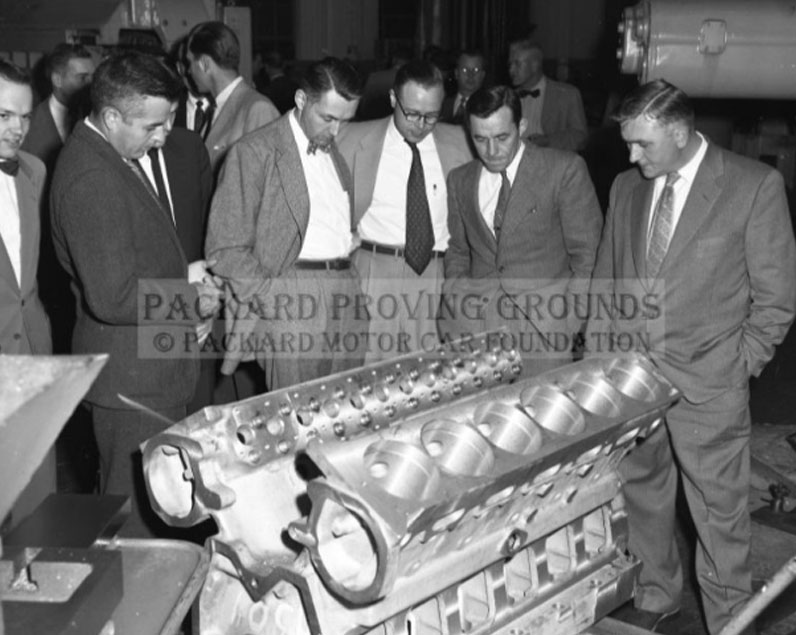
Navy personnel inspecting a fully machined ID 1700 Cylinder Block.
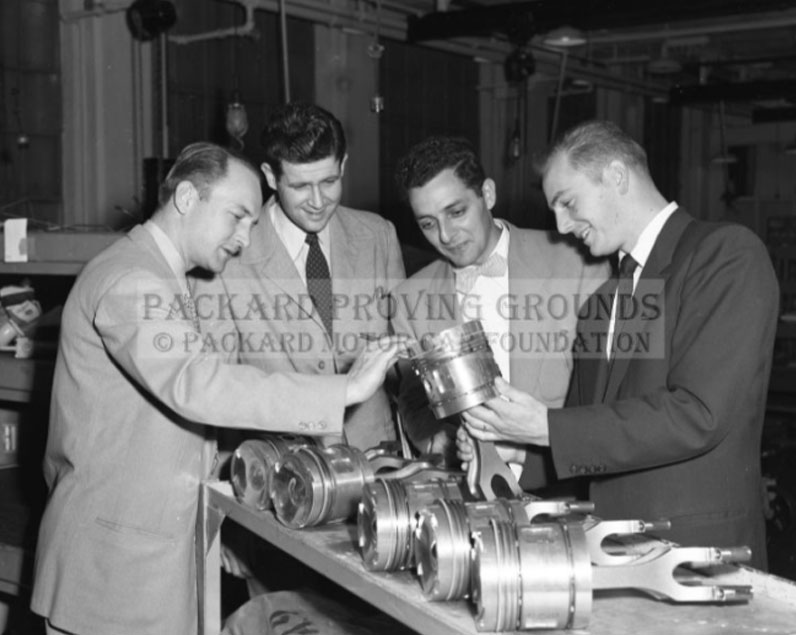
Navy personnel inspecting a fully machined piston and rod assembly.
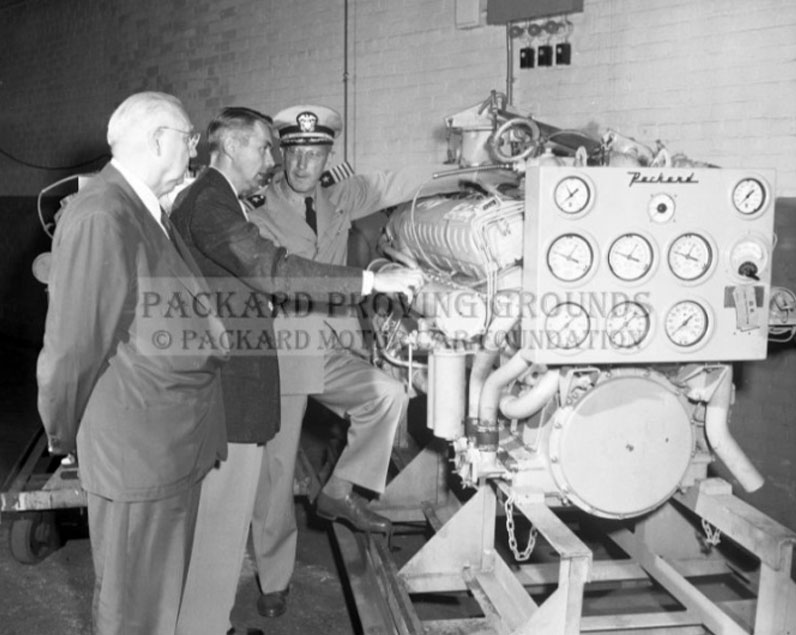
Navy personnel inspecting an engine and Packard-supplied control panel.
Dual Duty on the High Seas
A standard wooden ocean minesweeper carried four Packard Model 1D-1700 turbosupercharged, 600-horsepower V12 engines. Operating at a constant RPM and using advanced Westinghouse hydraulic couplings as clutches, they performed a clever double-duty:
- Propulsion: Pushing the heavy wooden ships safely through active minefields via variable-pitch propellers.
- Mine Detonation: The outboard engines were dual-clutched to spin massive, non-magnetic generators. These sent powerful electrical pulses into a long cable, known as the “magnetic tail” or “mag-tail”, towed behind the ship, creating a “fake” magnetic field that safely exploded mines at a distance of about a quarter-mile. The goal was to keep the “barycenter” (the center of the fake magnetic field) sitting hundreds of yards behind the minesweeper’s stern so that the hull remained safely outside the mine’s lethal blast radius.
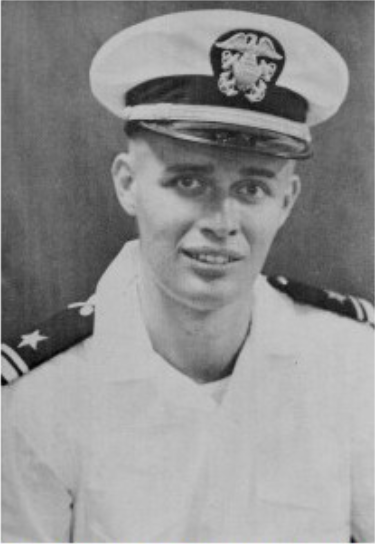
LTJG George Stewart
Captain George Stewart, USN (RET), provided an excellent explanation of how the USS Force (MSO 445), an Aggressive Class ocean-going minesweeper, functioned:
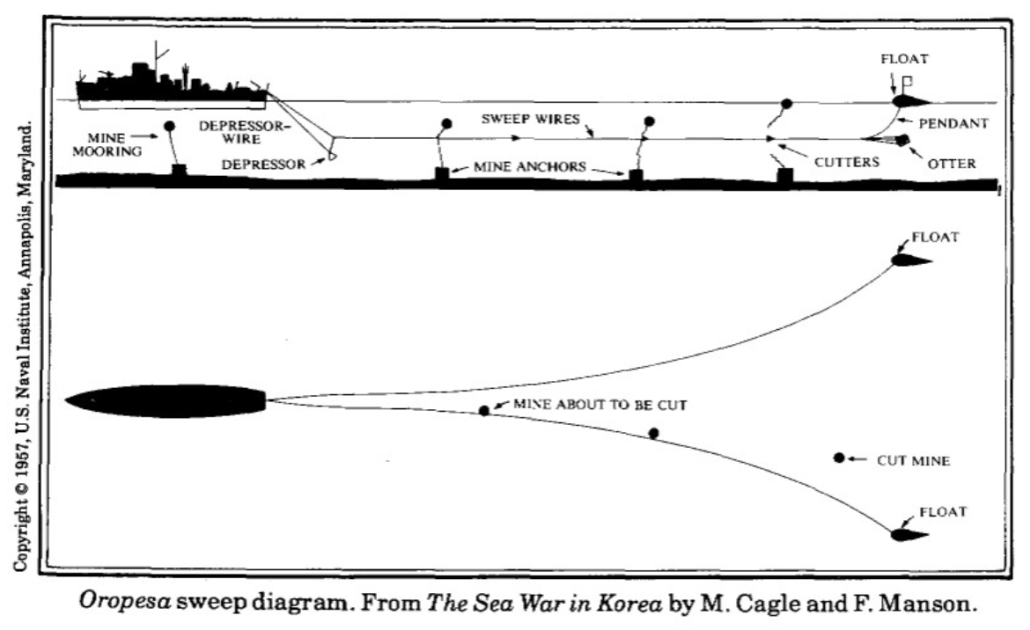
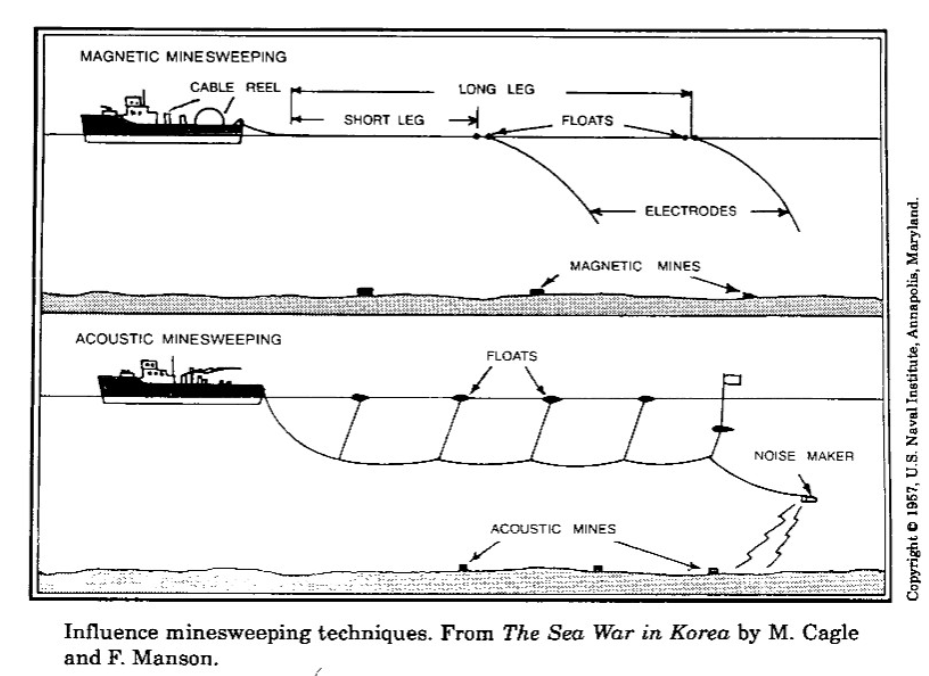
“The Force was of wooden hull construction with non-magnetic diesel engines and other equipment. Minesweeping equipment included: Moored Mines – Oropesa (“O” Type) gear, Magnetic Mines – Magnetic “Tail” supplied by three 2500-ampere mine sweeping generators, and Acoustic Mines – A Mk4(V) and A Mk6 (B) acoustic hammers.
The main propulsion plant consisted of four Packard 1D1700 non-magnetic diesel engines driving twin controllable pitch propellers (CRP). This was one of the earliest CRP installations in the Navy. Each of the two packages consisted of a pair of engines coupled to drive a propeller shaft by means of a common reduction gear. The engines were connected to the reduction gear by way of hydraulic clutches. The two outboard engines also drove magnetic mine-sweeping generators which were fitted with large flywheels. The flywheels were necessary because the generators delivered their output to the magnetic “tail” in pulses.
There were a total of five diesel-driven generators located in the Forward Engine Room. These included a 185 kW ship service generator which was normally used when underway and 100 kW and 60 kW sets for use in port. There was also a third magnetic mine sweeping generator set which was identical to the main engines plus a 300 kW variable frequency generator which supplied power to the acoustic minesweeping equipment.”
As described by Captain George Stewart, Minesweepers (such as the Aggressive-class USS Force) relied on non-magnetic construction and four 600-hp Packard Model 1D-1700 turbosupercharged V12 engines to counter three primary mine threats:
- Moored Mines: Submerged, anchored mines cleared using towed “Oropesa” (O-type) wire paravanes that severed mine tethers, surfacing them for destruction by gunfire.
- Magnetic Mines: Triggered by a ship’s metallic signature, these were safely detonated ~1/4 mile behind the ship. The outboard Packard engines—dual-clutched via hydraulic couplings to flywheel-fitted, high-amperage generators—pulsed electricity through a towed “magnetic tail.” This shifted the magnetic center (“barycenter”) far sternward, well outside the hull’s blast radius.
- Acoustic Mines: Detonated by propulsion noise, these were neutralized using towed mechanical or electronic acoustic hammers (e.g., Mk4(V) and Mk6(B)) driven by a 300 kW variable-frequency generator.
Cracking the Engine Code
The engine on display at the Packard Proving Grounds features a highly specific Navy designation: 1D-1700 T-5A. The following describes this military code:
- 1: First configuration/generation of this basic engine layout.
- D: Stands for Diesel.
- 1700: The approximate displacement of the engine in cubic inches (technically 1,704 cu. in.).
- T: Stands for Turbosupercharged (equipped with exhaust-gas-driven turbos to boost air intake and hit 600 hp).
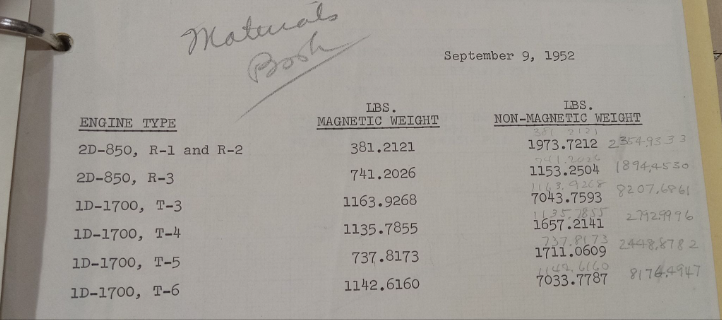
Our engine is a T-5 type. As you can see from Marsden Ware’s notes in the photo below, there were other types of non-magnetic engines manufactured with varying weights. The variety of 1D-1700 engines likely are tweaked to fit a particular ship configuration.
The USA – MSO-438 USS Esteem Booklet of General Plans
provides detailed diagrams that illustrate the precise placement of the ship’s Packard 1D-1700 engines and generators.
Source documents like Marsden Ware’s notebooks and Captain George Stewart’s Naval Historical Society interview illuminate both the engine’s technical design and what it was like to serve aboard a minesweeper.
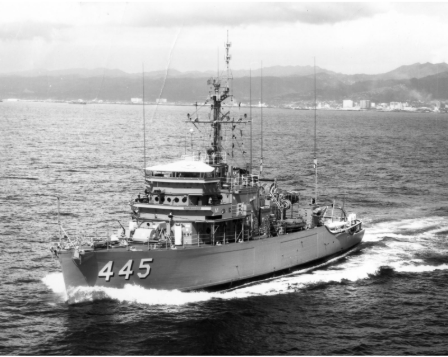
The U.S. Navy ocean minesweeper USS Force (MSO-445)
was originally powered by Packard 1D-1700 engines.
Sadly, even though the metallurgy of these engines was genius, Captain George Stewart notes that the Packard 1D-1700 engine was not without problems.
Captain George Stewart noted that “The non-magnetic diesel engines had a history of poor reliability and required constant care and feeding. The original Packard engines aboard Force were later replaced by Waukesha engines as part of a major re-powering program in the 1960s.
He also noted that the replacement brought its own set of problems. “A combination of the wooden hull construction and the presence of 9 diesel engines plus two oil-fired boilers resulted in a significant risk from fire. At least 8 ships of the class suffered significant damage due to machinery spaces fires and three of these, including Force itself in 1972, were lost for this reason.”
Politics and the Fall of Packard
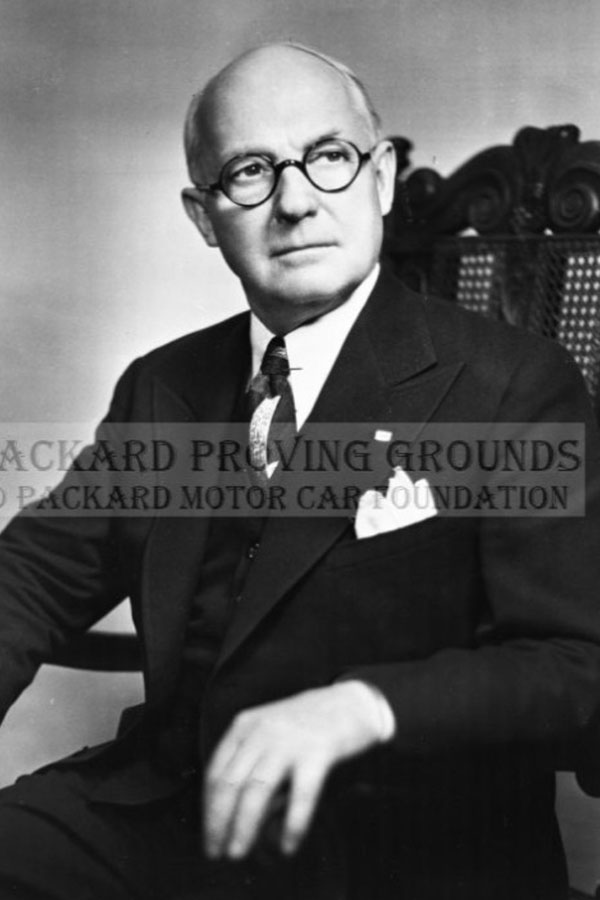
Despite their metallurgical triumph, the “Series 142” engines coincided with Packard’s downfall due to Secretary of Defense Charles “Engine Charlie” Wilson.
Assuming office in January 1953, the former General Motors president brought a corporate mindset that rejected WWII and early Korean War “dual sourcing”—the practice of spreading contracts across medium-sized firms (like Packard, Studebaker, and Willys) to maintain a broad war-ready industrial base. Viewing this as wasteful, Wilson introduced “The Single Efficient Producer” philosophy, treating procurement like GM by awarding whole contracts to single large producers for maximum economies of scale.
Aligned with Eisenhower’s “New Look” policy—which slashed conventional defense budgets to fund nuclear weapons and airpower—and coinciding with the July 1953 Korean War armistice, Wilson abruptly canceled “secondary” contracts with standard, overnight termination clauses. Between 1953 and 1957, he rerouted these contracts from independent manufacturers to larger suppliers, often favoring GM. This controversial shift permanently altered the U.S. economy and military-industrial complex. Deprived of its vital safety net, Packard lost $426 million in defense work, forcing a merger with Studebaker and hastening the automaker’s demise. (A February 23, 1954 Detroit Free Press article details contemporary reactions to the policy.)
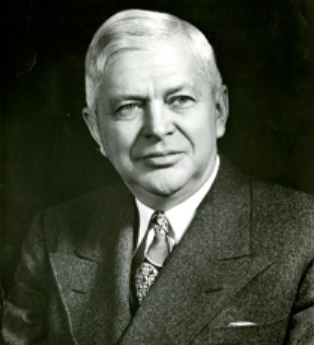
U.S. Secretary of Defense Charles Erwin (“Engine Charlie”) Wilson
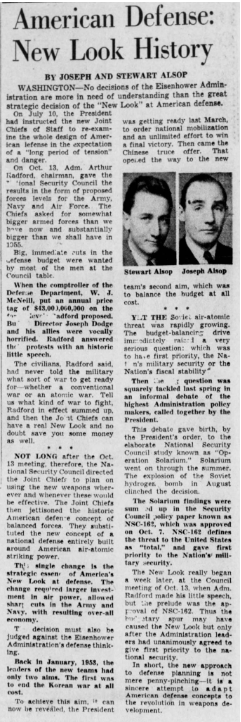
Detroit Free Press Article (February 23, 1954)
Who Suffered?
Packard was far from the only victim of Wilson’s ruthless corporate restructuring. Independent auto and manufacturing companies that historically relied on defense work as a vital financial cushion during economic downturns were decimated:
- Studebaker Corporation: Had its lucrative military truck contracts sharply cut back, putting it in a financial freefall that dragged down Packard.
- Kaiser-Frazer / Willys: Kaiser had massive contracts to build C-119 cargo planes for the Air Force. In June 1953, Wilson abruptly cancelled the contracts, forcing Kaiser to abandon car manufacturing in the U.S. entirely and merge with Willys just to survive on Jeep production.
Who Benefited? (The Rise of the Big Three & Defense Giants)
By channeling hundreds of millions of dollars away from smaller, independent suppliers, Wilson’s “single efficient producer” doctrine funneled almost all remaining defense dollars straight into America’s absolute largest corporations.
- General Motors: Already the nation’s largest defense contractor, GM saw its share of the defense pie solidify. Even though Wilson was forced to sell his $2.5 million in GM stock to pass his Senate confirmation, critics pointed out that GM directly benefited from competitor cancellations. For example, when Packard’s J47 jet engine contract was cut, production was routed directly to GM’s Allison division and General Electric.
- Ford and Chrysler: These giants had the massive factory infrastructure required to meet Wilson’s demands for cheap, high-volume production of tanks and conventional vehicles.
- The Major Aerospace Giants: Companies like Boeing, Lockheed, and North American Aviation saw their budgets swell as Wilson’s “New Look” prioritized heavy strategic bombers over the conventional land and naval forces built by smaller industrial shops.
The Unintended Consequence
While Wilson successfully cut the defense budget by over 10% and streamlined the Pentagon like a private corporation, his aggressive policies permanently killed off America’s independent automakers. By eliminating their military lifelines, he inadvertently created a massive market monopoly for the Big Three (GM, Ford, and Chrysler)—leaving survivors like the Packard non-magnetic V12 as rare monuments to an era when independent American engineering could rival the biggest corporations on earth.
A Pristine Survivor
The engine you can see today at the Packard Proving Grounds is one of only 451 of this model ever produced. When the Navy phased them out in favor of simpler engines in the late 50s, the vast majority were scrapped with the vessels. Consequently, surviving examples are remarkably rare today.
This specific unit was never actually installed on a ship. It spent decades safely preserved inside its original factory crate, most likely as a vital naval depot spare before being donated to the Detroit Historical Society, which has generously loaned it to the Packard Proving Grounds.
It stands as a monument to Detroit’s engineering genius—a 2,449-pound powerhouse built to wage a hidden war.
Have you seen the V12 Minesweeper engine in person? We welcome you to visit us at the Packard Proving Grounds and see this piece of hidden history up close! You are welcome to schedule a tour here.
